

What to wear when your belly swells due to endometriosis?
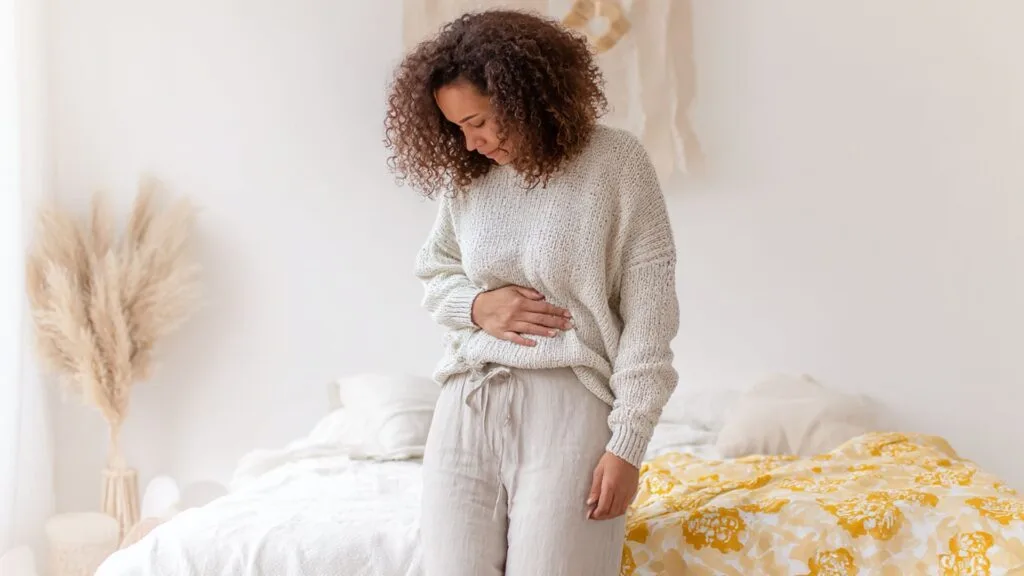
You know this scenario all too well. In the morning, you zip up your favorite pants without a problem, feeling light and at ease. But around noon, you start to feel the pressure mounting. The button digs into your flesh, the belt becomes an instrument of torture, and by evening, you look like you're six months pregnant . This is EndoBelly – endometriosis. It's not "a little fat" or the usual bloating after a heavy dinner. It's a painful, rock-hard distention of the abdominal wall, often accompanied by skin so tender that even the touch of the fabric is painful.
In moments like these, fashion takes a backseat, and survival becomes the priority. But does that mean you're doomed to wearing sweatpants around the house? Absolutely not. Clothes can be your ally—they can act as a soft bandage that provides a sense of security while also allowing you to look professional at work or feminine on a date. Let's talk about how to build a wardrobe that respects your body on bad days.
Enemy number one: a stiff waist
When you have EndoBelly, your waist can expand by up to several centimeters in just a few hours. Therefore, stiff, non-stretchy fabrics in this area are a surefire path to suffering. Classic, thick, high-waisted jeans, which we love for their body shaping, become a trap on EndoBelly days. Pressure on the lower abdomen not only intensifies pain but can also exacerbate intestinal problems and lymphatic congestion.
The solution isn't to give up pants, but to change their construction. Look for "paperbag" pants – they tie at the waist with a sash, with elastic hidden at the back or sides. These pants "work" with your belly. As your waist increases, the material gives way, not causing painful digging into your body. Culottes or palazzo pants made from flowing materials like viscose or Tencel are also a great alternative. They're elegant, airy, and, most importantly, don't resist a bloated body. If you absolutely can't part with jeans, look for ones with a touch of elastane (also known as jeggings) or try the old trick of a hair tie hooked into a button – a little cheat that adds precious inches of room.
Dresses – Your Secret Weapon
For many women with endometriosis, dresses are a true godsend, completely eliminating pressure around the crotch and lower abdomen. However, not every style is suitable. Tight-fitting tube dresses can accentuate a bulging belly, which for many of us causes psychological discomfort and questions about pregnancy that we'd rather avoid.
The key to success is a cut that cuts under the bust (empire) or an A-line (trapeze) silhouette. These dresses highlight the cleavage or shoulders, and the fabric flows freely over the stomach without touching it. This provides incredible physical relief – nothing constricts you, your intestines have room, and you feel airy. It's also worth making friends with jumpsuits. A well-tailored jumpsuit made of soft knit can look very stylish and feel as comfortable as pajamas. It's the perfect balance between elegance and comfort, especially on days when you have to go to the office.
What you can't see and what hurts the most
We often forget that pain relief begins closest to the body – with underwear. Endometriosis is often associated with allodynia, or hypersensitivity to touch. Lace panties, stiff elastic bands, or digging seams can irritate nerve endings in the abdominal skin, intensifying the sensation of deep pain.
Revamping your underwear drawer is one of the first steps in building comfort. Seamless briefs, preferably high-waisted ones that reach down to the belly button, can work wonders. They work a bit like very delicate compression underwear – they lightly hug the belly, providing a sense of support without constricting it. It's also worth paying attention to the material. Bamboo or modal are much gentler on sensitive skin than synthetic lace. And remember – there's no shame in wearing a size up. If size M leaves red welts on your skin, don't hesitate to exchange it for a size L. The label is there to serve you, not you to serve the label.
Breaking the Taboo: The "Pregnancy" Section
This is an emotionally difficult topic. Many women with endometriosis struggle with infertility, so entering the maternity clothing section can be a painful experience. However, it's worth trying to approach it from a task-oriented perspective. These clothes are designed by experts for growing bellies. They feature special panels, ultra-soft straps, and adjustment systems that perfectly meet EndoBelly's needs.
Maternity jeans or leggings with a high cotton panel are a major fashion find for many endometriosis patients. This panel not only doesn't constrict but actually warms the aching belly, providing a soothing effect. If you overcome the mental barrier and consider these garments simply "functional" or "medical" clothing, you can gain an ally that will help you get through the worst days in complete comfort.
Remember that your style doesn't have to disappear with the onset of pain. You have the right to feel attractive, even when your belly protests. By choosing softness and looseness, you're sending your body a message: "I notice you, I respect your pain, and I care about you." This is an important part of therapy and self-care, one that no doctor will prescribe, and it will transform your daily life.
Źródła:
- Luscombe, G. M., et al. (2009). Abdominal bloating: an under-recognized symptom in endometriosis. Diagnostics confirming that abdominal bloating is one of the main and most bothersome symptoms endometriosis, often ignored in diagnostics.
- Vercellini, P., et al. (2014). Endometriosis: pathogenesis and treatment. – Papers discussing the mechanisms of inflammation that lead to swelling and pain hypersensitivity (allodynia) in the pelvic area.
- Whitaker, L. H., et al. (2016). Clinical diagnosis of endometriosis. – A publication drawing attention to the correlation between intestinal symptoms and the location of endometrial lesions.